

Koko Love on Art, Integrity, and ‘The Cost of Freedom’
Interview by Sarah Evangelista
For Koko Love, making music has never really been about chasing numbers. Before his debut album hit streaming platforms, he was performing the songs live, selling the project by hand, and letting it exist via human connection. That approach says a lot about The Cost of Freedom itself… honest, instinctive, and completely uninterested in playing by the rules.
Across the record, Love dives into the highs and lows of being a full-time artist: freedom, self-doubt, comparison, relationships, creativity, and trying to stay true to yourself while existing online. Some lyrics came from moments he understood instantly, while others only revealed their meaning months later. Whether he’s talking about struggling with self-promotion, trusting intuition in the studio, or trying to push alternative music into mainstream spaces without losing its edge, everything comes back to one thing: following what feels real.
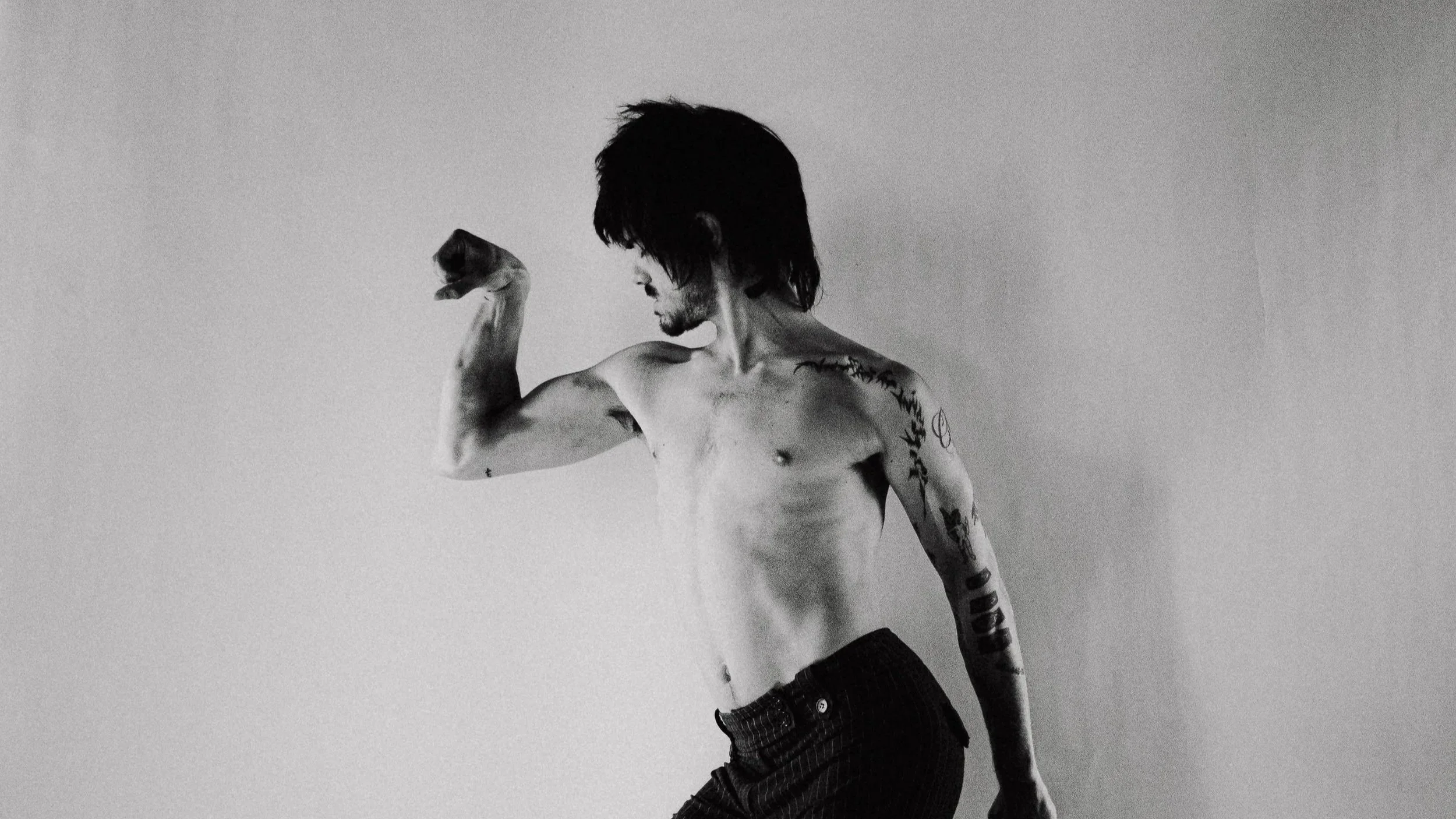
Photo by Thomas Fontaine
The title track explores the idea that freedom comes with a cost. How does that idea show up in your day-to-day life as an artist?
Being a full time artist for the past 6 years of my life has been the source of a lot of inner battles. It’s a lot of freedom, and it can definitely be overwhelming at times. Although in retrospect, I’m always happy to be on the good side of it and feel like I’m exactly where I’m supposed to be.
You let the album live in the real world before streaming... performing, and selling it by hand. Did that approach change how you think success looks for an artist today?
Definitely. At the end of the day everyone has a different definition of success, and I’m always reiterating what it means to me to be successful. It’s a work in progress. But I will say that my idea of success today is completely different than my idea of success 10 years ago, that’s for sure. That said, I’m still struggling with comparison and am guilty of feeling ashamed for not being productive enough a lot of the time, or not being active on socials for instance. That’s a big one for me that’s created a lot of inner battles over the years. That said, the past year has definitely proved me that success doesn’t necessarily means touring the world or having billions of streams. It could be as simple as finishing a project, putting your music out in the world, meeting a fan in real life. u know? Simple things.
Lyrically and sonically, the album comes from an honest place. What experiences most influenced the writing?
My writing is oftentimes just my honest perspective on life. I try to be as unfiltered as possible. For instance there’s a line in The Cost of Freedom that says “I’m in love with you and music and I just can’t choose my favourite.” I can understand how bad it sounded when I first showed this song to my girlfriend haha, but it is what it is. It’s how I felt, and I’m not one to censor myself because I’m scared to rub people the wrong way. But generally I’m just inspired by the day to day, stuff that I’ve read, conversations I’ve had with a friend, my relationship. It’s very intuitive. I never sit down and say “this is what I’m gonna talk about today”. It’s more like letting my subconscious speak. Some of the stuff only makes sense months or even years after I’ve written it. I’m sure a lot of writers can relate to that as well.
When you’re producing your own music with collaborators and friends like Soran, how do you know when a song is truly finished?
Soran and I have developed a trust and an inner knowing of when things are finished, with a rather simplistic approach I would say. If it feels good as is then it’s probably finished. We work really fast in general. We try to finish ideas in one go. We’ve found that it’s often the best way to go about it. Capture the magic while we’re in it and then move on. We come from an abundance mindset, trusting that there’s an infinity of ideas, a constant flow that never runs out. So we commit to one idea, finish it, and then move on. What I’m trying to say is we do not overcomplicate things ever. If something doesn’t feel right we usually move on to the next idea. If something feels good we usually just commit to that idea.
Is there a lyric on the album that you feel people might misunderstand at first?
The chorus on Man I’m Not. Even I wasn’t too sure what I meant by “can’t stop being a man I’m not.” I wasn’t too sure what it meant, it just came out of my mouth. Until one month ago after a chakra healing/therapy session. Me and Soran went together and after our session we hopped in the car and the car started on a radio station that was, believe it or not, playing Man I’m Not on the radio (I can’t make this up). It was my first time hearing it on the radio and it was just a huge synchronistic moment after everything we went through during the therapy session. On my end a lot of it revolved around integrity and not being completely aligned with who I really am at the core. When that chorus came in, it just hit me. “Can’t stop being a man I’m not.” I don’t know why, it just clicked in my head that this is what I meant.
You reference your past era in "The Cost of Freedom"... (“it was just Miko against the internet.”) When you look back at that version of yourself, what feels the most different now?
I used to go by @mikovstheinternet on IG and I guess in that regard not much has changed. I’m still on the fence about all this internet shit. But I will say that I’m much more intentional about my life and my career today than I was back then. I didn’t really have a plan. I was just releasing singles left and right and figuring shit out in real time. And it gathered some attention. Looking back, I should’ve probably put out a full length project or something of substance, but I just wasn’t there quite yet.
You’ve said your mission is to make alternative music mainstream. Do you think that happens by changing the sound, or by changing the way people experience it?
I think there’s a way to trick people into thinking an alternative piece of art belongs in the mainstream world, but it’s a very fine line. I’ve always been really obsessed with the idea of alternative crossing over to the mainstream and why it works or doesn’t. It’s definitely not by changing the sound. I think, on the contrary, I think you should always strive to push the boundaries of what the mainstream world is willing to accept and see what sticks.
What part of the album’s journey—from writing to busking to releasing it widely—felt the most meaningful to you?
Definitely the writing of it. The releasing of it I always wished I didn’t have to do. It’s so painful to me. Self promotion and all that. Plus it feels like putting your baby up for adoption. It’s not ours anymore. The writing of that album was particularly special for me and Soran at a very specific point in time in our lives and I’ll remember forever. Definitely an era. And the making of the album taught me so much. I grew a lot, not only spiritually, but it also taught me about finishing what we started and committing to ideas…
I asked a Random Question Generator to give you a random question... If you lost all of your possessions but one, what would you want it to be?
I always say that I’m a fan of music first, creator second. So please just leave me something to listen to music on or else I’ll go crazy.
Who are you listening to right now? Who should people pay attention to?
I listen to A LOT of music but these days I’d say I’m really immersed in the world of Jessica Pratt. I’m really hypnotized by her. I admire how consistent her sound has been over the years, and that last record she put out is a masterpiece imo. She’s been accompanying my mornings every day as of late.