

A Conversation with anaiis on Doing it Right the First Time, Following Your Intuition, and Everything that Lies on the Other Side of Fear
Interview by Eva Lynch
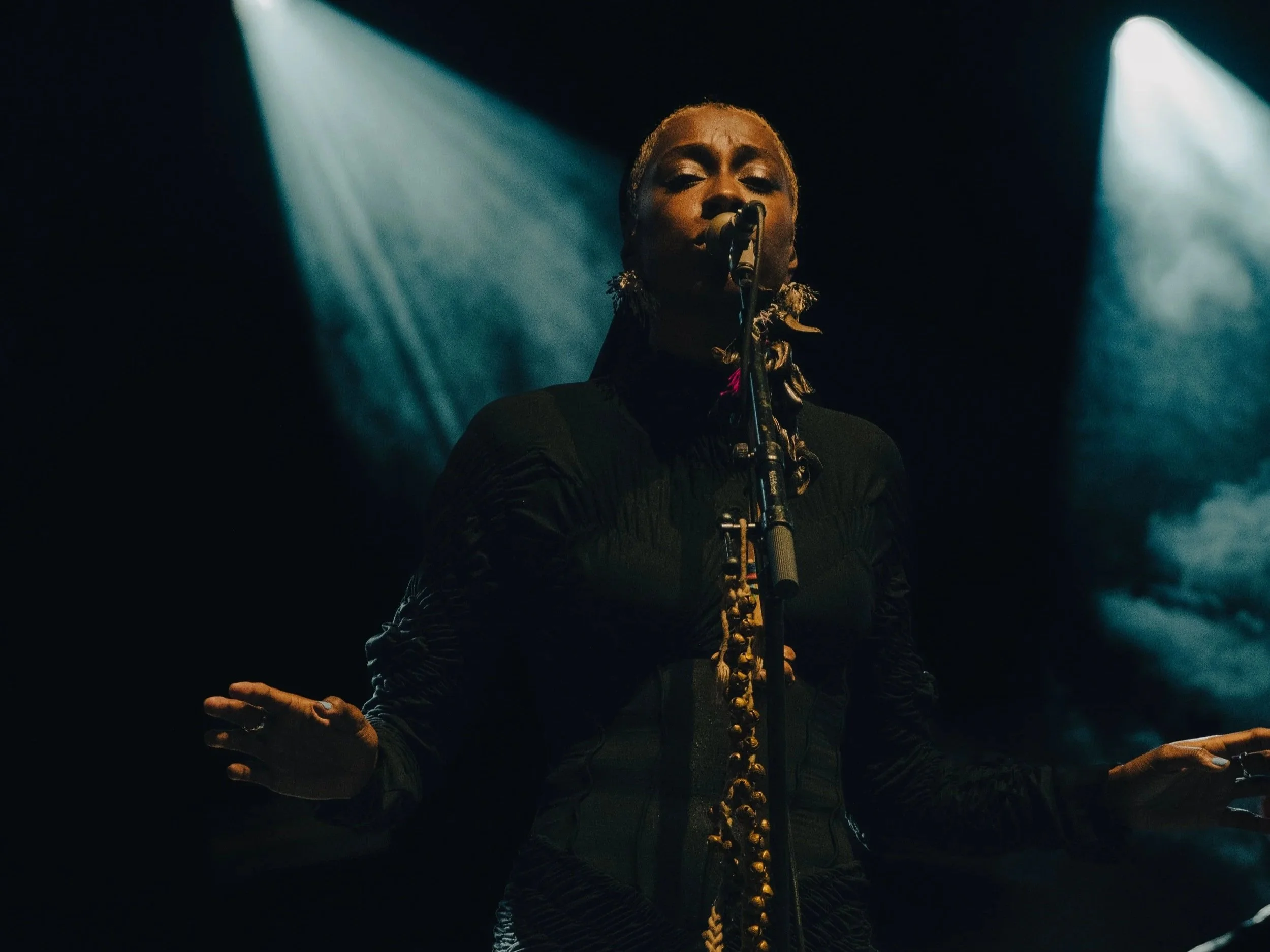
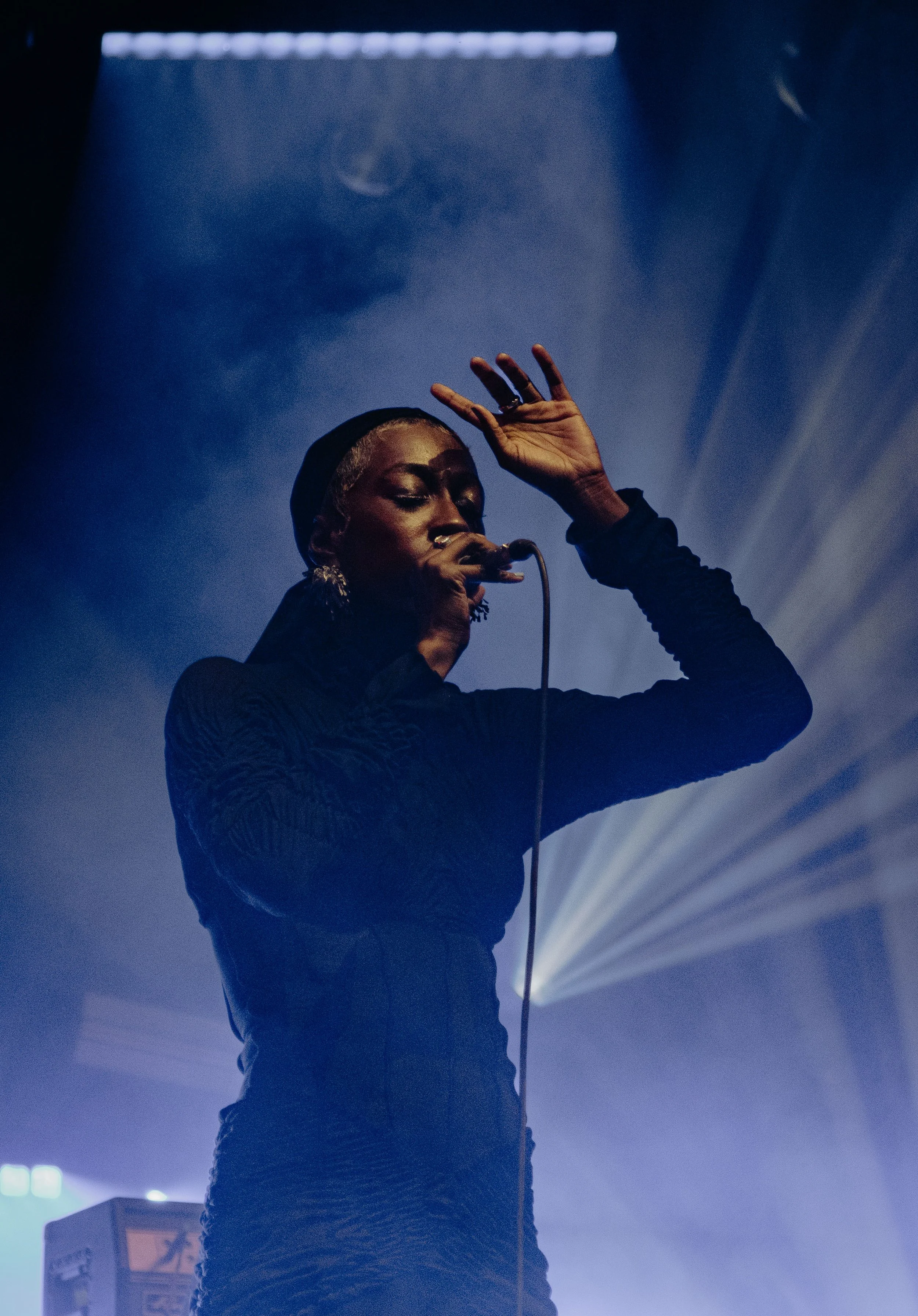
One of my favourite albums of the past year was anaiis’ Devotion and the Black Divine. Recorded live-to-tape, layering vulnerable vocals and ethereal harmonies, this album aches with humanity and is such a tender portrait. I sat down to chat with her ahead of her show with Grupo Cosmo at Montreal’s Jazz Festival, where we talked about her upcoming tour and how warm her reception in Montreal has been, following the premiere of the album’s accompanying art film, Devotion and the Black Divine, at Foil Gallery the day before.
Eva Lynch (TMEB): Where is your favourite place to visit?
anaiis: One of my favourite places to go back to is Brazil. I wish I could live there.
My first time going was for a residency. I stayed in Salvador for one month, which is in Bahia, and is the more kind of Black state of Brazil. And then I did two weeks in São Paulo, and then flew back to London. When I came back to London, I had this song, which is called "Toda Cor", featuring Luedji Luna. I had that song for ages, and I just didn't know how to get it finished and do it right. A few years later, I discovered Sessa's music, and I reached out and said, ‘I love the sound of what you guys are doing. I have this song, do you think you might be able to help me? We could collaborate on finishing it.’ I sent it to them, and they were like, ‘yeah, absolutely, let's do it.’ Then we recorded the song.
We hadn’t met, this was all over FaceTime, but they were like, 'Come to Brazil, let's make some more music!’ We had no expectations of what would happen. We had six days in the house, we were living together and cooking and doing stuff, going to the beach, and then also making music. At the end of that week, we had written what became anaiis & Grupo Cosmo. The process felt so collaborative and beautiful.
I've always dreamt of being in a band, because I think being a solo artist is a little bit lonely. It's cool because you get to make all the decisions. It's different when you have to share the decision making, but it felt so beautiful and special. It didn't feel right to just say, "this is my project,” it was ours.
Did it push you creatively in new ways, and surprise you?
Absolutely. I mean, to be honest, I was also coming from a period of my life of a lot of transformation, because I just became a mom, and everything was on the table, I didn't really have a specific direction. I had made a lot of music during my pregnancy where I felt this immense pressure to be productive, because I don't know what's gonna happen on the other side of this thing, and I hated everything I made, because everything was forced, you know? And this was the opposite of that. It was just zero pressure, zero expectations, let's just make music, and let’s see what happens.
It really gave me a new permission and a new approach to making music, and now I always make music like that, even my solo projects. I don't put as much pressure on them as I would have before I became a mom, and I think my music has significantly improved from being in that place. I think it's better because when you overthink things, you overwork them, and you don't trust yourself, and you lose the spark. So I gained a new respect for creativity, and the fact that songs and music are like a plant. It has its own life, and you can’t force it to grow in one specific way. That’s where I’m at right now.
I came to your talk at yesterday, and really loved hearing you talk about this idea that you have to let go of being a perfectionist in order to achieve a flow state, and how surprising it was to you to see what poured out when you relinquished that control, especially with this idea of recording live to tape.
Fear is the problem. Fear is on the other side of control, or the thing that motivates control is fear: the fear that I'm not good enough; fear that this is not good enough for other people; fear of how I'm going to be perceived. It's not connected to divinity, and it's not trusting in the forces of the universe that are much bigger than us. I'm not religious or anything, it's just very obvious when you look at creation in the world, all of these things are miraculously working together for us to be able to be here and breathe this oxygen, and there's a magic that's always there--that I call the magic, because I can't really explain what it is--and that same thing is just as valid in the process of creativity.
When I started looking back at my favorite music and the artists that I loved, I realized these people weren't being so precious. I think that something happened. Maybe it's after Lauryn Hill made The Miseducation of Lauryn Hill, and it was the best thing ever, everyone started to think, ‘my first album needs to be everything’. We get so much immediate feedback nowadays. When you put something out, people tell you if they like it or hate it. But when I was looking at albums by Prince and Nina Simone, all these artists that have so many albums, I realized when you let it flow, you're more tapped into the universe. Sometimes you have to go through the process to get to the thing that you're meant to make. So, sometimes you have to make a song, let it out, so that then you can make the song that you were really meant to make, or the thing that you really want to create. You have to get there by first making the thing beforehand.
Absolutely, I think it's interesting too that you bring up Lauren Hill, because Miseducation is of one of the best albums ever, and so hard to follow up, but she went on to do MTV Unplugged and it was a total freestyle performance of songs one had heard before. Everyone wanted her to sing the classics, and she was like, that is done so that I can now be free to do what I want to do.
And you know what's crazy? Miseducation wasn't even her first album, because she was in the Fugees, and she had plenty of experience. That's the thing I think we sometimes forget when you look at this album, but if you read her interviews, she talks about being with Wyclef, and how much she learned, so by the time she even got to Miss Education, she'd been in her process, it's just it was held in this other container of The Fugees, which was also insane.
All of this is just to say, let yourself create and let yourself be free. I'm so grateful for Lauryn Hill, because she's teaching everybody so much, all the time. The way that she's like carrying her life, she's showing us a lot. It's amazing.
Totally. In trying to be less precious, how do you capture these moments of inspiration or creativity?
You actually capture them. That's how you do it. So for me, the way I do it is I'm recording when I'm jamming, and a lot of the songs come out of it. Like Honeydew for example is entirely a freestyle, not the words, but every single aspect of the melody. Because we were recording it, I went back and I listened and instead of saying, “okay, let's go back and let's refine,” there was something so spirited about this melody, and then I just tried to put the right words. Then I just re-recorded it, you know? Before, I could spend hours sort of creating, but not actually documenting what I'm creating. So now I just document really early, and I just record the demo. I don't really make demos anymore, I just do it right the first time, if I can.
That's really cool. I love this album, Devotion and the Black Divine is so beautiful. You’ve talked about some of your inspirations, or people you've like toured with, and that a lot of them also record live to tape, like Dijon, Nick Hakim…
Yeah, I love them, they're some of my biggest inspirations
It's interesting to have you identify this quality that unites you all, that you're following an instinct, and there's something warm and very authentic in what you’re able to capture, which is often quite hard to put a name to.
I think there's an alignment in our respect for the sound of things. I think both of those people are probably quite nerdy about the gear that they use, probably way more than me, but I think we want to feel the same things, which is rawness, authenticity, feeling, and your unique voice.
I don't enjoy when I hear things, and you can tell it was made wanting to please the public, or trying to recreate something. We all have influences, like I know for sure that I naturally have songs where people say ‘this reminds me of that’ but I think I try to just follow my intuition, which is like my guide, and I think those people do that really well.
As do you! I was watching your film yesterday, and was struck by your chapter: my mother was a freedom fighter. I was curious if that's connected to Aja Monet, who is also a part of Jazz Fest this year.
Oh, she is? That’s crazy! Yeah, that is exactly what it is!
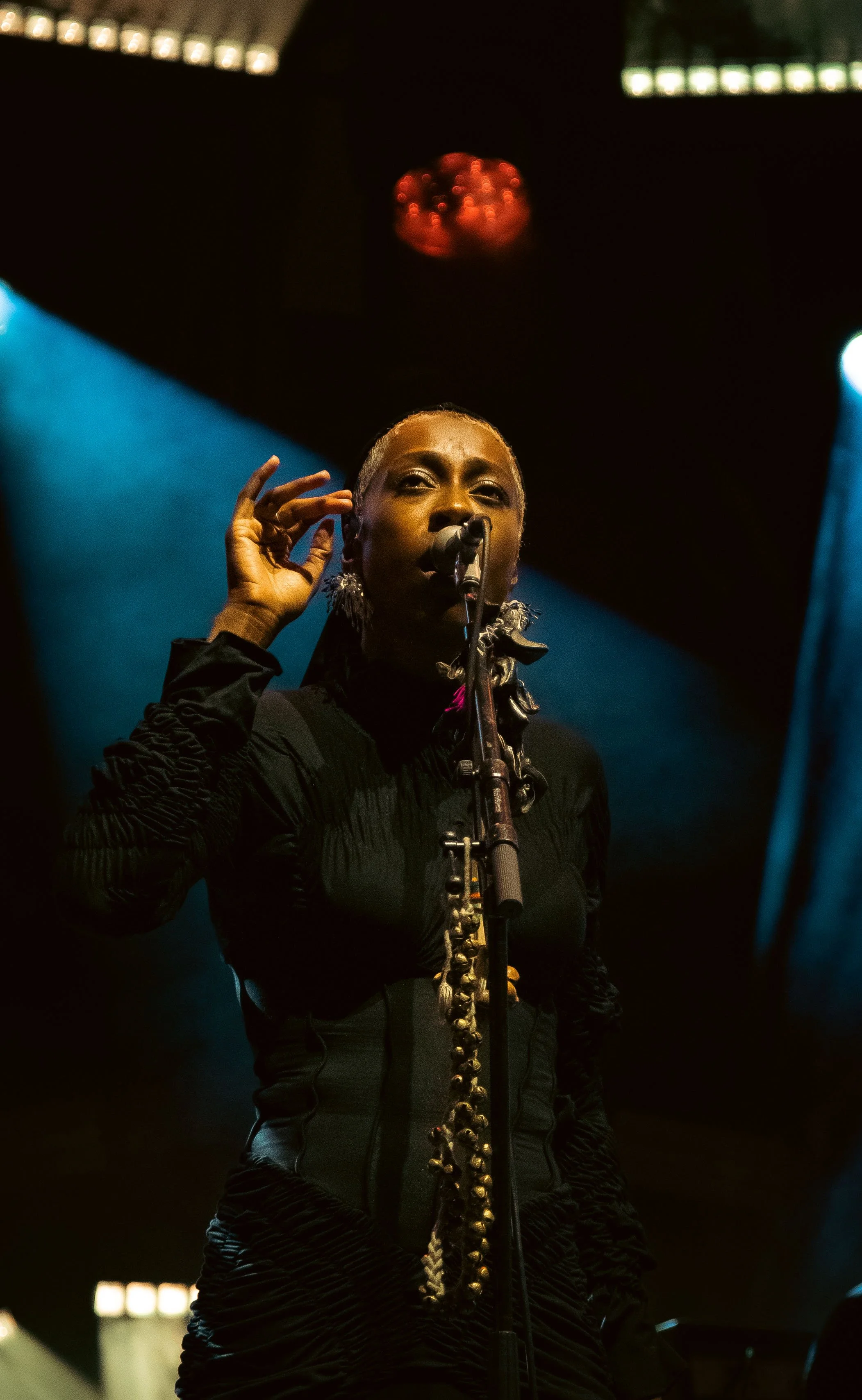
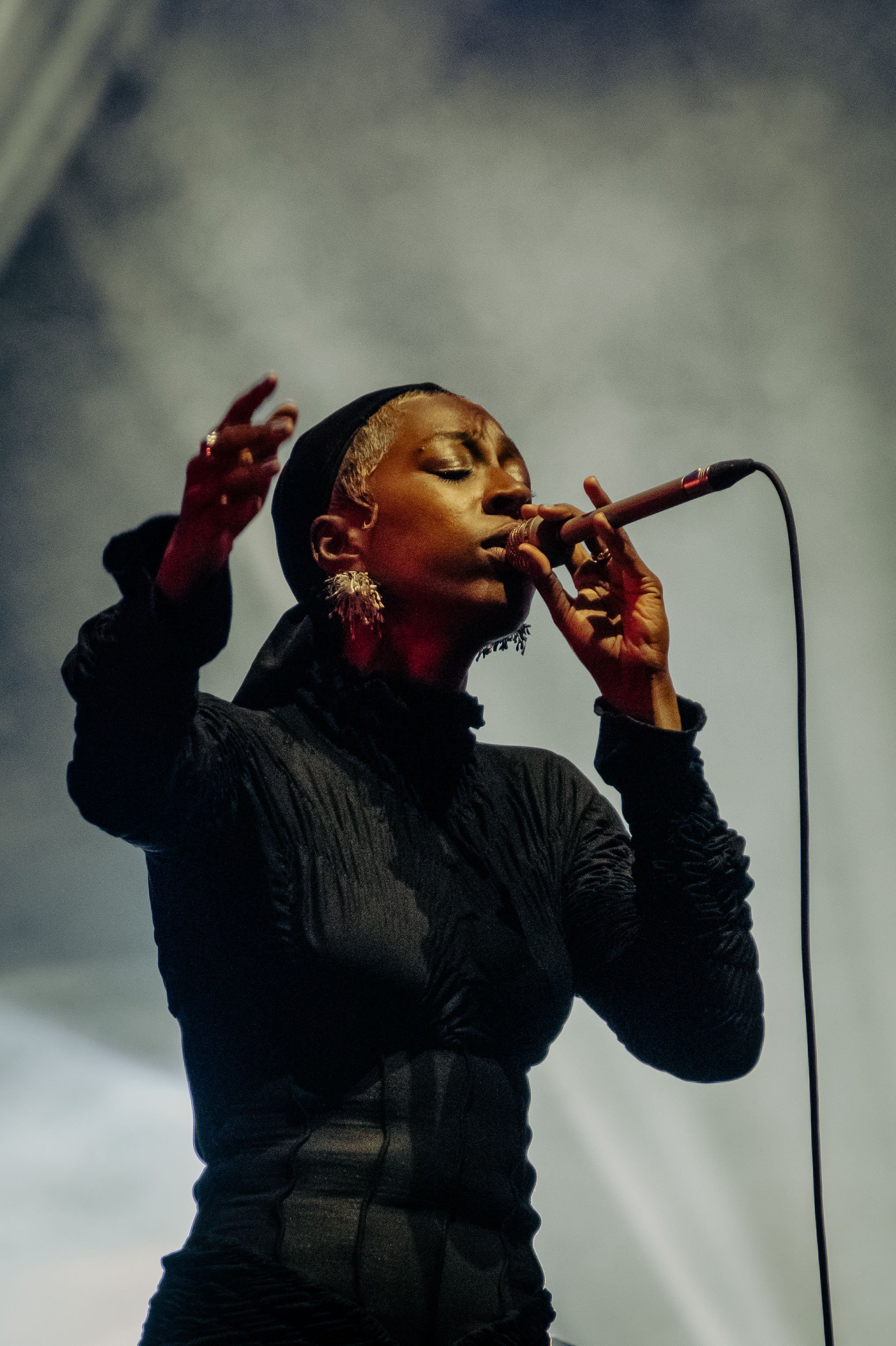
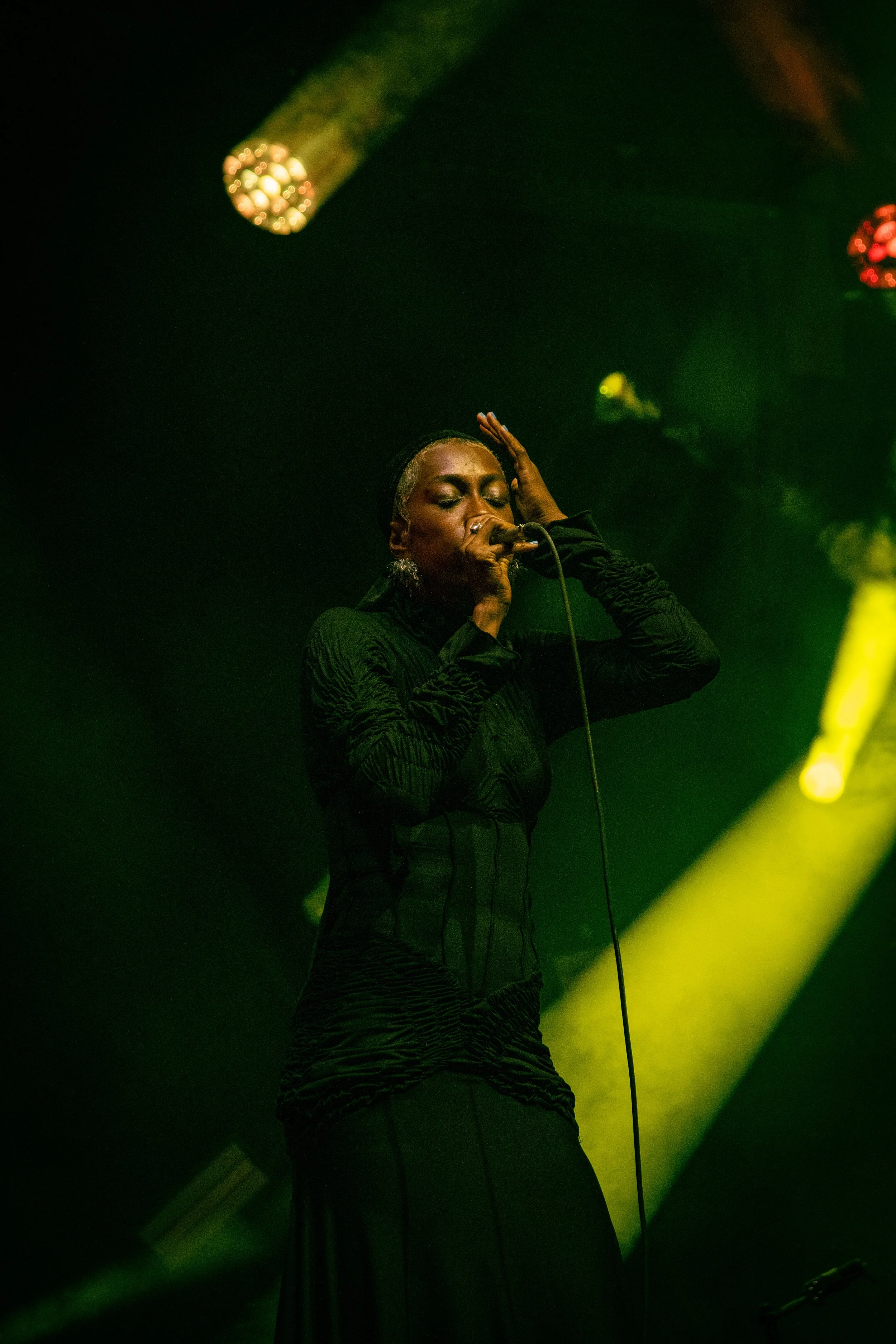
I wanted to ask you about this idea of not being bound to a place but finding home in community, and how creativity and community inform your process.
I think she's another one of those artists, thinkers, and creatives that I'm really inspired by. In terms of building community with my audience, I think the people that tend to come to my shows, I often see a lot of similarities between us, or I get really inspired by some of the people that come and their ideas and thoughts. I feel like a lot of artists listen to me, even younger musicians, and also the community of artists that I want to be within, you know, and those people like the Aja Monets.
I feel like there is a space, because there's people that are a bit more experimental. I think they're not so clear cut and there's quite a wide range of influence, but there's something maybe somewhat political about their work, or you know, quite intentional, like really artistic. I'm drawn to art that is intentional, you know.
Thinking of art that's intentional, and also interacting with your audience. Something that was really cool about your film yesterday is how the audience hung on to every word you said. Not only the film, but also during your talk about making yourself feel small in this world, and how you were able to come into your power and step into intention. Everyone around me was just in awe of how you made them feel seen, and that was really special to witness. So I'm curious, what the reception has been like for you, like with this album, but also especially with this film, where you've been able to take it in such a new creative direction.
Yeah, I mean, honestly, it's been so beautiful, because I think I have felt so held by people, in a way that I didn't expect. I think I realized that there are truths within us that are relevant for all of us, so when you start speaking truth and you're being honest, you're not, because this thing I'm like, I'm not putting on a persona, I'm not like out here like, ‘this is my new name,’ I'm just literally speaking with openness about my experience as a human being, so therefore it's bound to resonate with a lot of people, and I feel that we are in a time right now, where young people, especially, are just so much more open, and they want the truth. They're just done with facades to a certain degree, and I also think, with the world of AI, people are going to need that even more, because there's just so much disillusionment online. Things are not what they seem at all.
Even James Blake recently posted saying everything about the music industry is fake, like we're really getting to a point where we just can't trust things. So, whenever someone is speaking truth through sound or through voice or in any way and showing up as themselves, it resonates, and gives everybody strength.
I'm getting strength from the Aja Monets and those other artists that we have talked about, including Lauryn Hill and Erykah Badu, and I'm studying them now. I'm like, ‘Wow, you're bold. You're bold and you're brave, and you lead with love in your art.’ I think that's what I'm connected to, and hopefully that's why those types of people come into the room, you know?
Is that a lot of the first music that you listen to when you're getting into making music, because you moved around a fair bit? So I'm curious, between Dublin, Senegal, the Bay Area, what were you listening to when you were a kid?
To be honest, I don't think I’ve ever told this to anyone. This is an exclusive [laughs] but I feel that I was put in front of lots of music and not all of it was good. I'm not putting the blame on my mom, it's not her fault. I think that there was just a lot of bad music. When I think about the shit that I was listening to when I was a teenager, I'm embarrassed. I swear to God. Sometimes I meet artists, and they’re like, ‘oh, my parents had this amazing vinyl collection, and they have this incredible wide knowledge of music.’ Honestly I'm ashamed that I don't feel like I have the widest knowledge of music, but there were certain things that, when I heard them, it stuck.
Those people were like Erykah Badu and Nina Simone and D'Angelo. That music really did something. Jill Scott, India Arie, everybody from that kind of neo-soul era really shaped me. Now, I'm digging further into old 70s Brazilian music, and if you’ve ever hung out with me, I almost listen exclusively to lyric-less music. I listen to a lot of instrumental music. I kind of love “world music”, you know? I like Ethiopian music, I like piano, I love classical music. I started as a violinist when I first started as a musician, when I was like seven, So I feel like I've had all these different influences, and I'm somehow finding myself through it, but it took time. I think it took a process of also going, ‘okay, this was junk, this does not need to live in your inspiration,’ you know? So there was a purification process.
Did you learn Portuguese for this project?
I didn't learn, but I'm learning. Always learning. I've definitely done like many years of Duolingo, but it's not going that well, actually, because I need to actually just go and spend some time there.
You’ve just gotta go back to Brazil.
Yeah, that's the plan. Gotta be on the beach, make some Brazilian music, maybe one day I could just live there
That would be pretty nice. You're putting the work in…
I'm putting the work in…like, adopt me
To wrap up, did you know that you wanted to make a film, and how did that come about?
Yeah, absolutely. I think if I was one of those artists with more resources, that they had to be pushing things even further. So I'm just trying to work with what I have available to myself.
It's awesome. Your music videos have always been so beautiful. I remember when I first watched your ‘Nina’ video.
Yeah, oh my god, that's crazy. Yeah, that's one of my prides. I'm proud of that song, but I'm really proud of that video. Like, going back to Senegal…I don't tend to say I'm multidisciplinary, but I think it's such an important component of what I'm doing.
My dream is to push things so much further, you know, in terms of the mediums, and I want to be able to like, make a sculpture that goes with a record. I don't know when I'm gonna have time to do it, but one day.
Maybe when you are in Brazil, on the beach [laughs]. I think it's tricky, because I mean, even from what you're saying, the reluctance to label yourself as multidisciplinary when you have so many different artistic talents that are coming together in projects, or this idea that you should grow up with this vinyl collection, all connects back to this feeling of never quite belonging and always feeling like an outsider.
It's so real, I wish I had those words yesterday [at the Q&A], because it is not feeling like you belong, and I think as a musician, I can confidently consider myself an artist now, but for so long--and even now--I still tend to feel like, ‘oh, where do I sit within all of this? ‘I think I do still experience a sense of outsiderness. But maybe we'll always feel like that, or maybe that's just part of my story. Sometimes I just think it's about me actually owning that feeling, like, ‘oh, actually I do belong,’ rather than waiting for someone to welcome you in
Hopefully with time, but also it's tricky because maybe that is always just like a feeling that we'll all have in the back of our minds.
Some things are always going to be a part of us. Sometimes they're quiet, sometimes they're louder, but what I do feel is that the music has found a home within lots of people, and I'm just grateful for that, for however long it lives with them, or if it helps them get through a period of time. Then I feel like I've done what I came here to do.
Do yourself a favour and go see anaiis perform Devotion and the Black Divine, September 23rd at Le Ministère, as a part of POP Montreal. Her voice and presence are enchanting, and create a performance that is sure to leave you changed. I’ll see you there!